The Red Dunes of the Namib and the Life That Thrives There
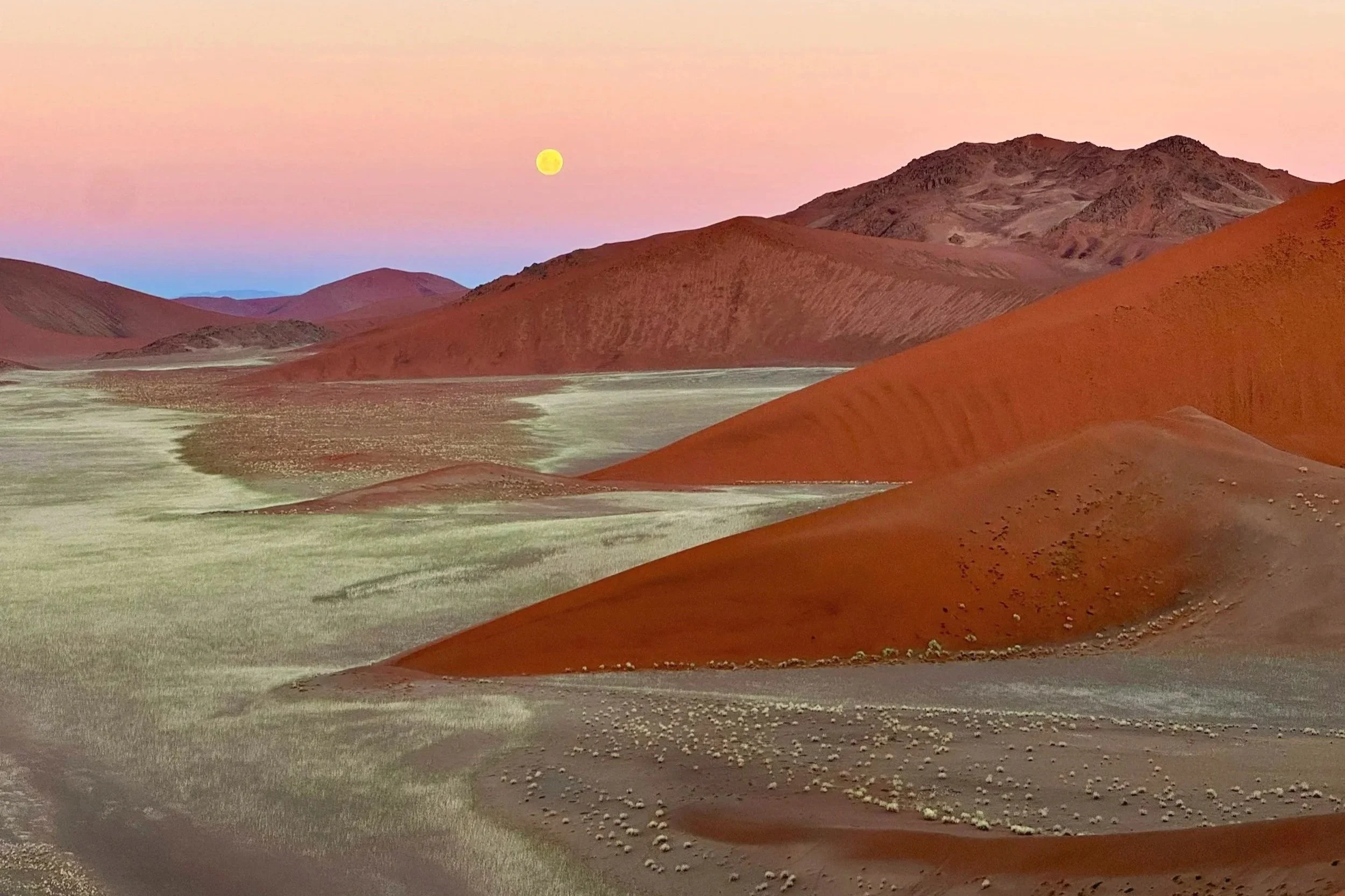
Sunset over Dune 45 in the Namib Desert, with the full moon rising above the iconic red dunes.
The Namib Desert is one of the oldest deserts in the world, stretching along Namibia’s Atlantic coast for over 2,000 kilometers. Its iconic red dunes, some of the tallest on Earth, are more than just a striking landscape — they are home to a surprising array of life perfectly adapted to this extreme environment.
Exploring the Namib is like stepping into another world: the deep orange sands glow at sunrise, shadows shift across the dunes, and the silence is broken only by the whisper of wind and the occasional call of a desert-adapted bird.
The Majesty of the Red Dunes
The dunes around Sossusvlei are the most famous, rising as high as 300–400 meters. Their intense red-orange color comes from iron oxide in the sand, giving the desert its signature hue. Climbing Big Daddy or Dune 45 at sunrise is a once-in-a-lifetime experience — the light transforms the landscape into an endless sea of colors.
But the Namib is more than a visual spectacle. Beneath the seemingly barren sands, a hidden ecosystem thrives.
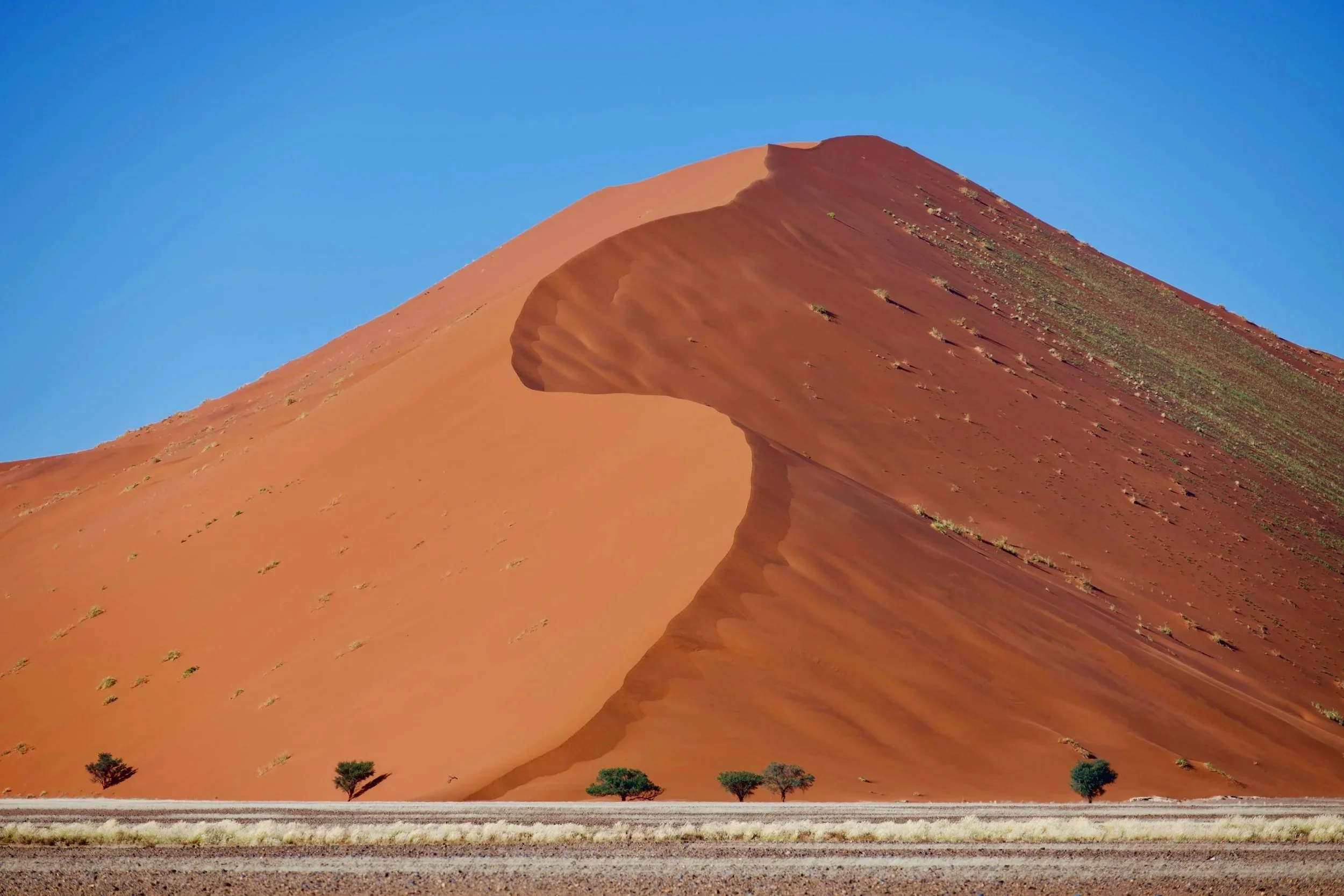
The famous Dune 45 under the bright Namibian sun, showcasing the vibrant red-orange sands.
Life in the Harsh Desert
Despite extreme temperatures and scarce water, the Namib hosts a remarkable diversity of life:
Oryx (gemsbok) gracefully traverse the dunes, searching for dew in the early morning.
Namib Desert beetles harvest moisture from fog that rolls in from the Atlantic.
Sidewinder snakes and lizards navigate the hot sands with remarkable adaptations.
Desert-adapted plants like the quiver tree and euphorbias survive with minimal water.
Every organism has evolved to survive in the harshest conditions, making the Namib a living laboratory of resilience.
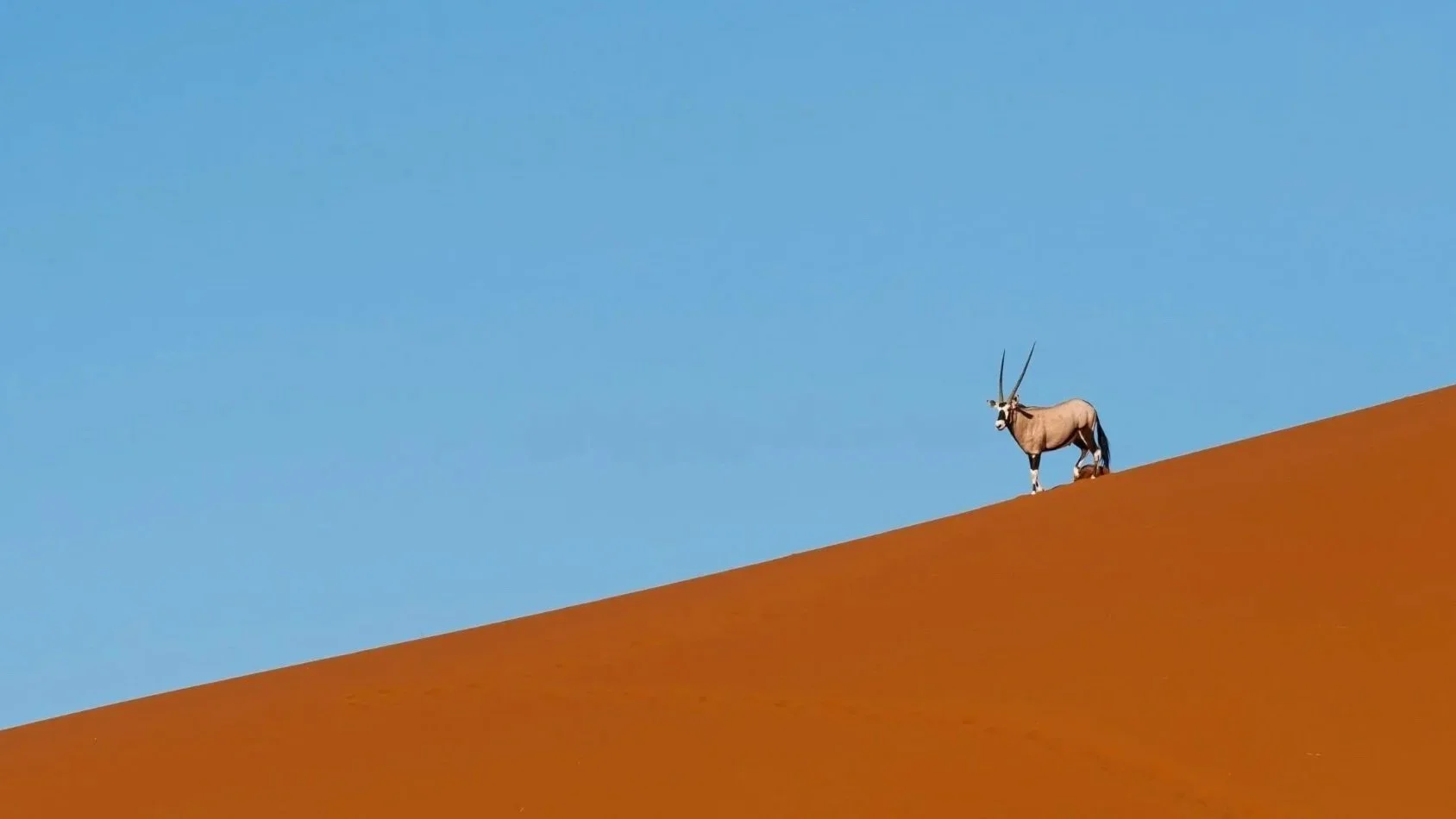
An oryx navigating the red sands of the Namib Desert, perfectly adapted to survive in the harsh conditions.
Experiencing the Namib Desert Responsibly
To truly appreciate the Namib, it’s important to explore with care. Eco-conscious travel ensures the fragile desert ecosystem is protected while offering immersive experiences:
Guided dune walks: Learn about desert survival, unique flora and fauna, and the geology of the dunes.
Scenic flights: Aerial tours reveal the vastness of the desert and the patterns of shifting sands.
Wildlife spotting: Early morning or late afternoon drives maximize sightings of oryx, springbok, and desert-adapted species.
Overnight in desert lodges: Sustainable lodges blend comfort with minimal environmental impact.
With the right guidance, visitors can experience the Namib intimately, without disturbing its delicate balance.
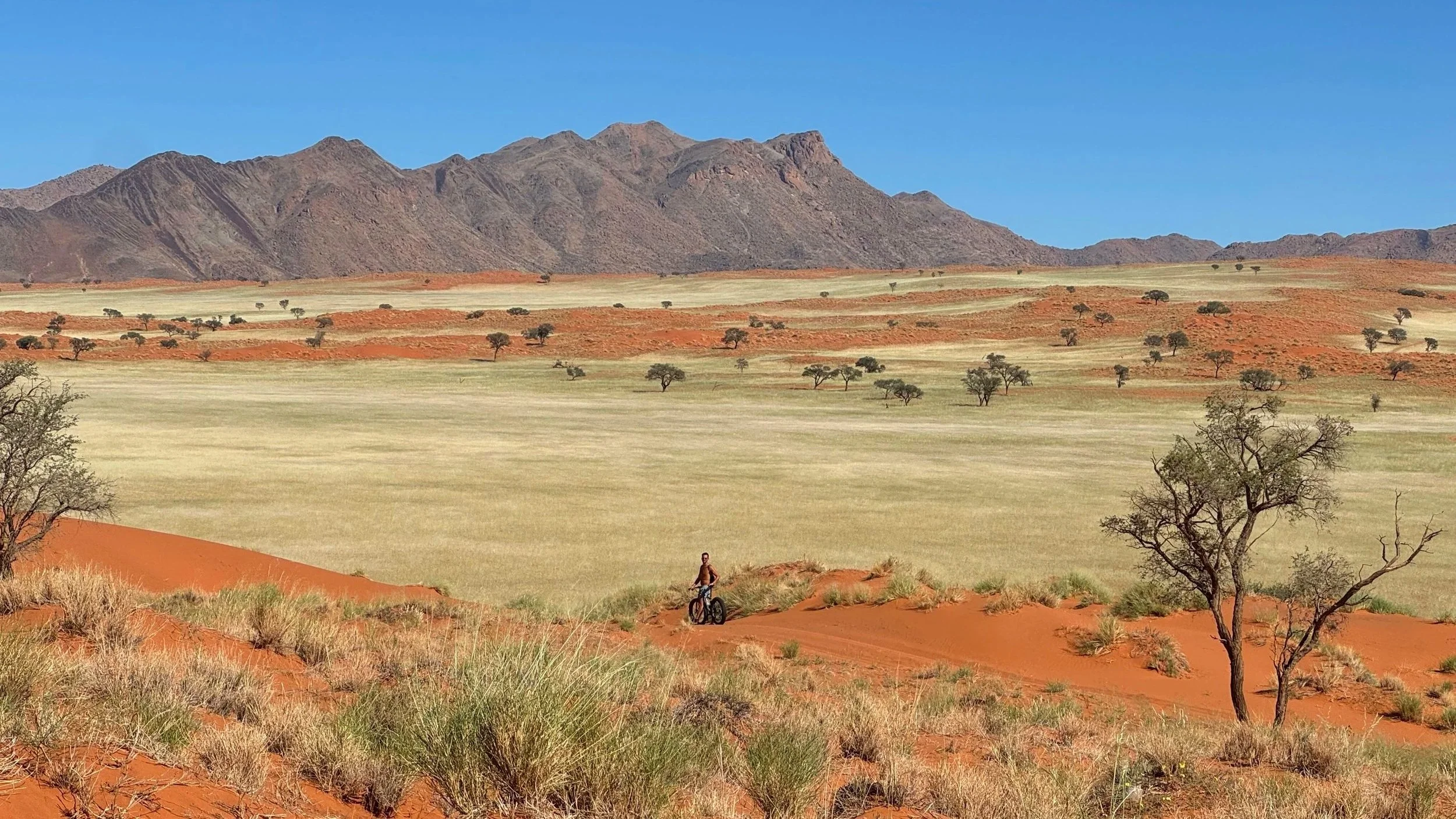
Exploring the Namib Desert on a fatbike in the Namibrand region, spotting desert-adapted wildlife while traveling responsibly.
Why the Namib Desert Should Be on Your Travel List
Few landscapes in the world evoke both awe and reflection like the Namib. From the glowing red dunes to the ingenious life that survives here, this desert is a testament to nature’s power and resilience.
Visiting the Namib isn’t just sightseeing — it’s witnessing an ancient landscape that has persisted for millions of years, learning from its adaptations, and leaving only footprints behind.
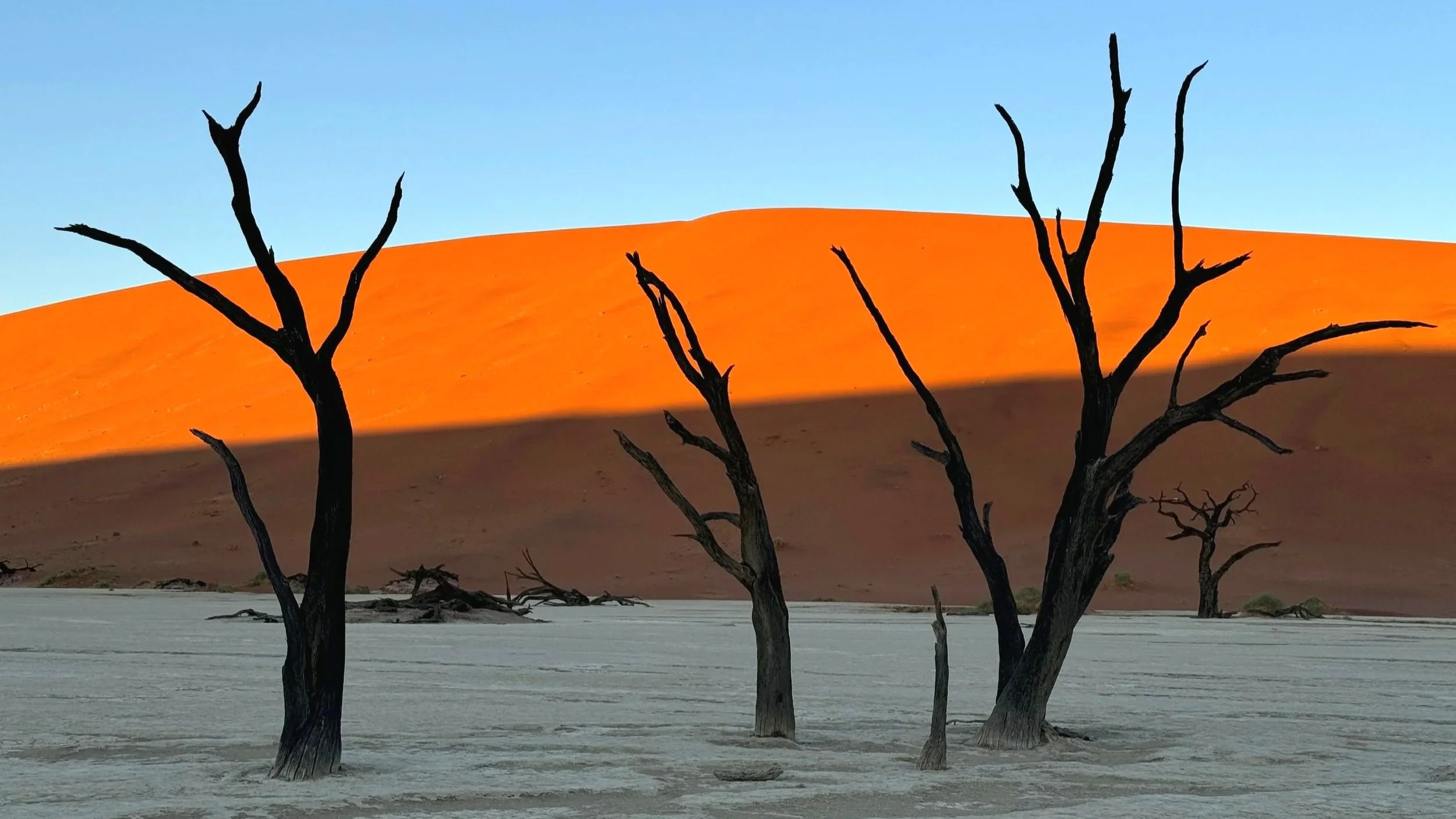
Sunrise over Deadvlei, with ancient dead camelthorn trees contrasting against the white clay pan and red dunes.
Plan Your Namib Desert Adventure
If you want to explore the Namib Desert safely, sustainably, and with expert guidance, I can help you craft a personalized itinerary. From climbing the iconic dunes to spotting desert-adapted wildlife and enjoying the quiet magic of the sands, your journey can be both unforgettable and responsible.
👉 Contact me today to start planning your adventure in the red dunes of the Namib.