Desert Giants: The Remarkable Adaptations of Namibia’s Elephants
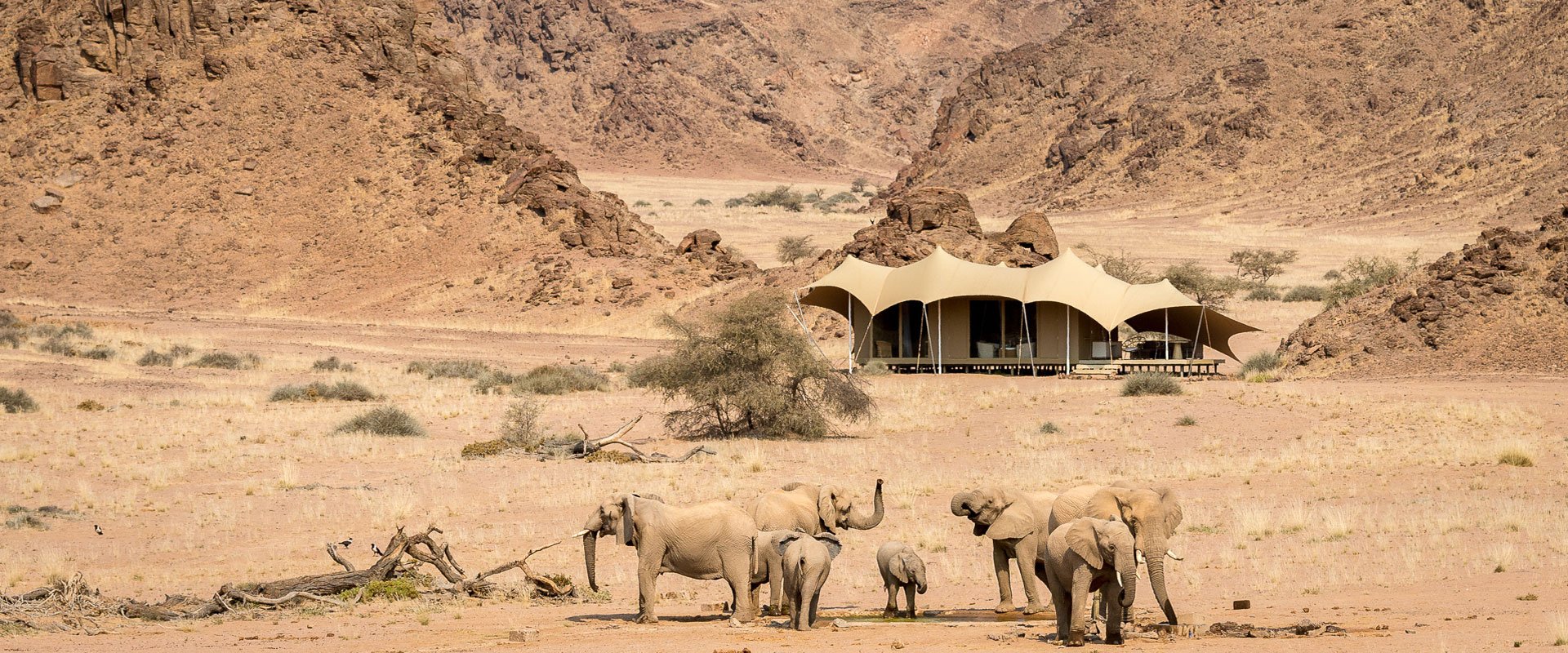
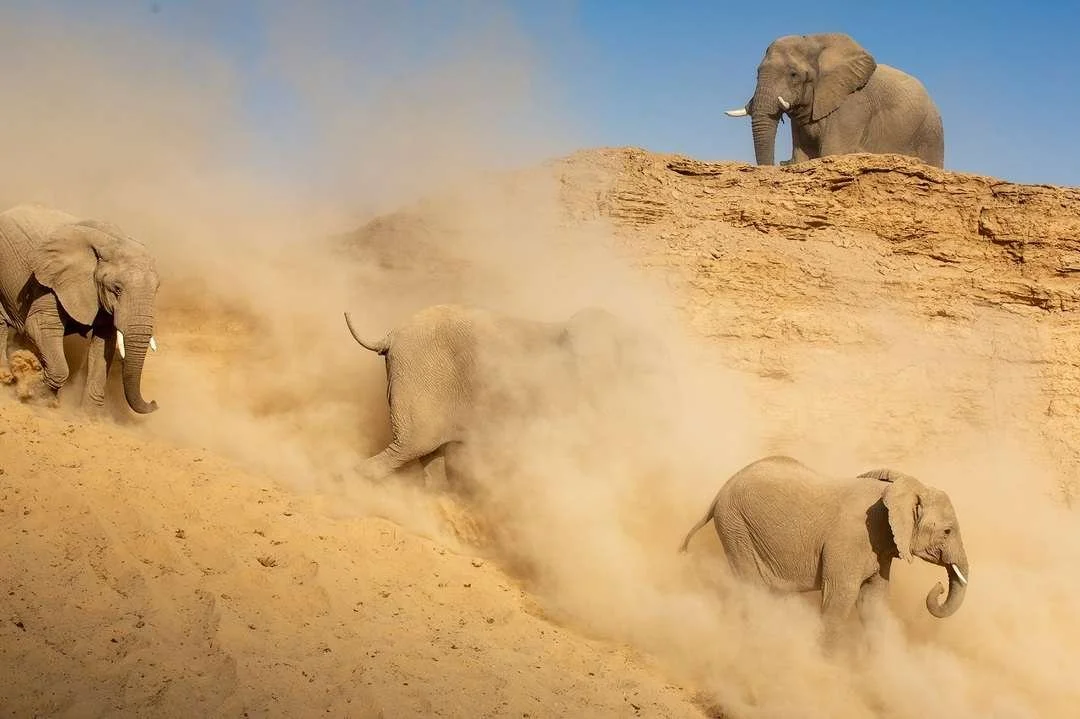
Desert elephants are among the most fascinating wildlife populations in Africa. Unlike their savanna relatives, these remarkable animals have adapted to live in one of the harshest environments on Earth. In Namibia, they roam vast arid landscapes, surviving extreme heat, scarce water, and unpredictable food sources.
Where Desert Elephants Live
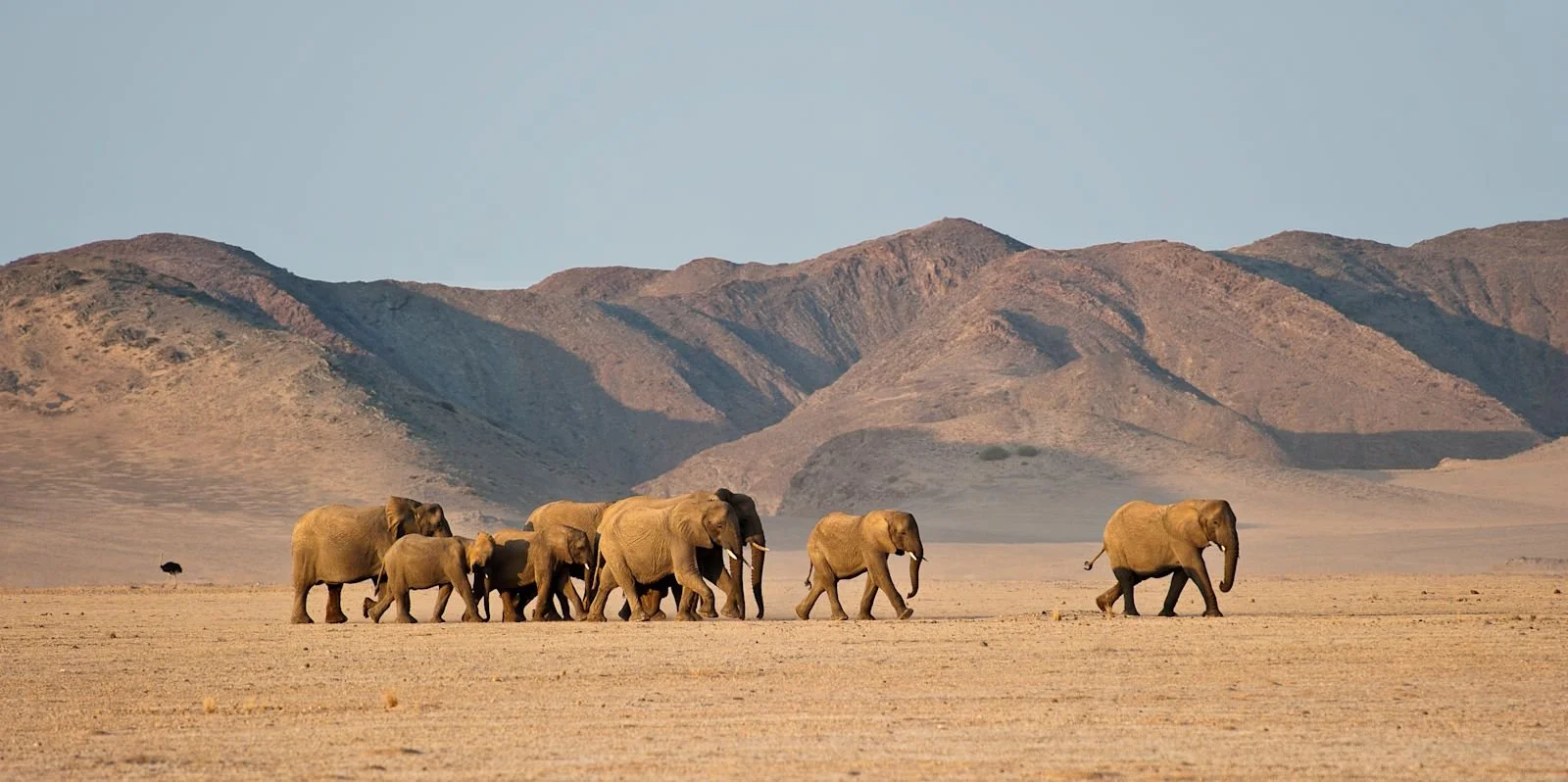
Desert elephants are mainly found in the northwestern regions of Namibia. Their range includes dry riverbeds, rocky valleys, and desert plains.
The key areas where they can be spotted include:
Kunene Region – The primary habitat of desert elephants, especially along seasonal riverbeds.
Hoanib River – One of the best-known locations for sightings.
Damaraland – A rugged area with dramatic landscapes and excellent wildlife opportunities.
Etosha National Park – While most elephants here are not desert-adapted, some populations move through drier zones.
These elephants often travel long distances, following ancient migration routes along dry river systems where underground water may still be accessible.
How Desert Elephants Survive
Desert elephants are not a separate species but a locally adapted population of African bush elephants. Over generations, they have developed unique survival strategies:
1. Exceptional Water-Finding Skills
They can smell water underground and dig into dry riverbeds to reach hidden sources.
2. Long-Distance Travel
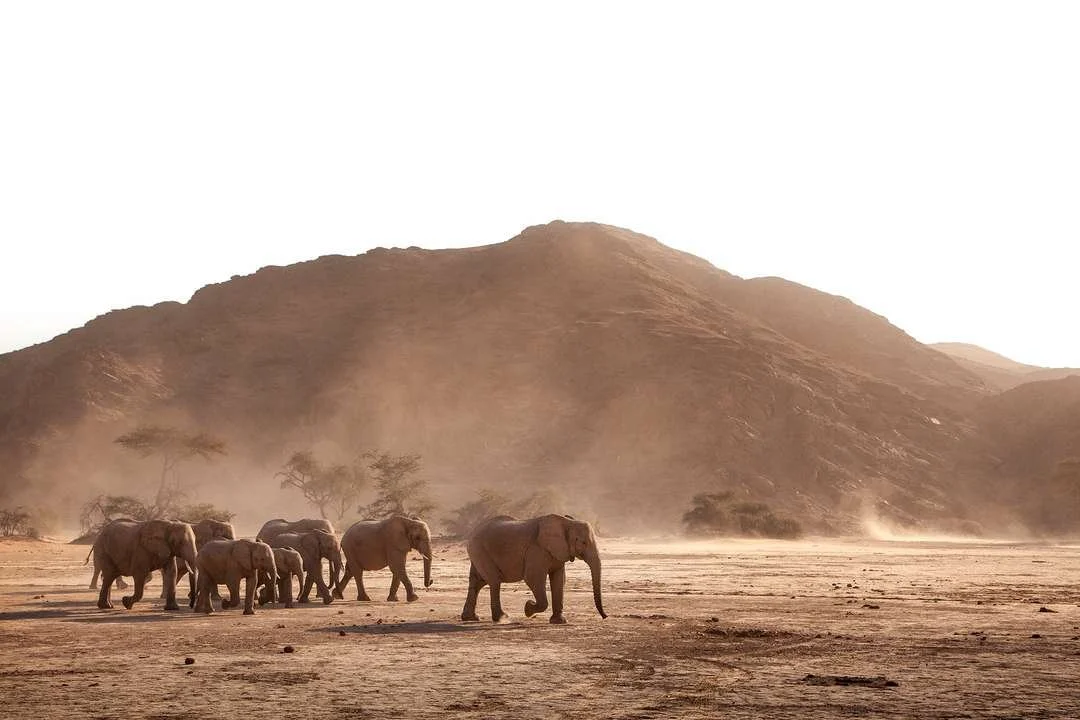
Desert elephants may walk up to 70 km (43 miles) per day to find food and water.
3. Smaller Herd Sizes
They live in smaller family groups than savanna elephants, reducing pressure on scarce resources.
4. Efficient Diet
They eat a wide range of desert plants, including tough shrubs, bark, and dry grasses.
5. Heat Adaptation
They are more active during cooler hours, often traveling at night to conserve energy.
Best Time to See Desert Elephants in Namibia
The dry season offers the best wildlife viewing opportunities.
Ideal Months: May to October
Water sources are limited, so elephants gather near riverbeds.
Vegetation is sparse, making animals easier to spot.
Temperatures are cooler and more comfortable for travel.
Rainy Season: November to April
Elephants disperse over larger areas.
Sightings become less predictable.
Landscapes are greener and more scenic.
How to See Them Responsibly
Because desert elephants live in fragile ecosystems, responsible tourism is essential:
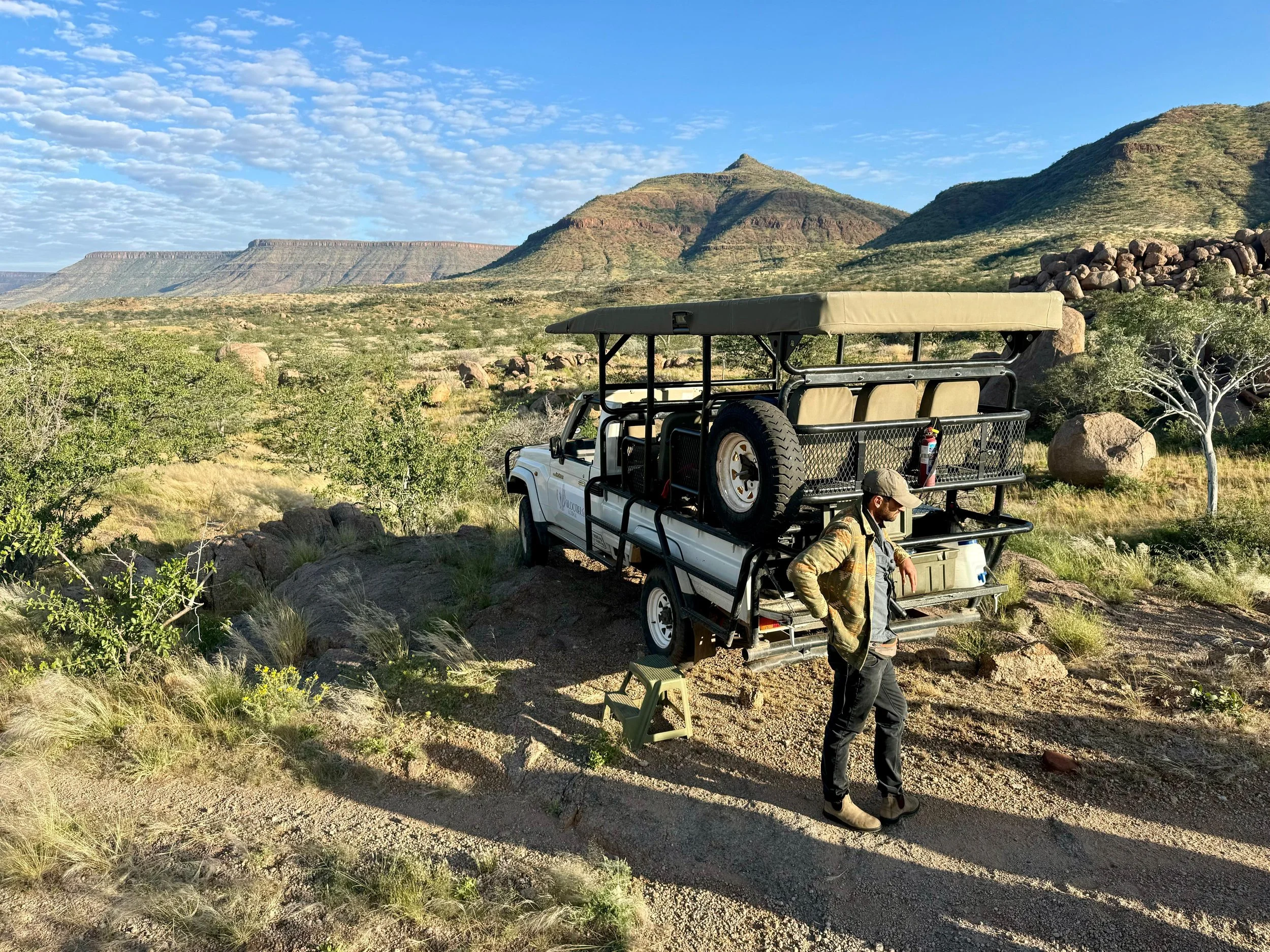
Travel with experienced local guides.
Keep a safe distance from herds.
Avoid disturbing their migration routes.
Support community-based conservation lodges.
Why They Matter
Desert elephants are a symbol of resilience. Their ability to survive in extreme environments highlights the importance of adaptation in the natural world. However, they remain vulnerable to habitat loss, human conflict, and climate change.
Protecting them means preserving one of Africa’s most extraordinary wildlife stories.
Visit Namibia and See Desert Elephants in the Wild
Planning a trip to Namibia to see desert elephants? I offer personalized travel planning services to help you experience these rare animals safely and responsibly.
Choose between:
Overlanding 4×4 itineraries with carefully selected campsites in elephant regions
Guided wildlife excursions with expert trackers
Luxury lodge stays in prime desert elephant habitats
Contact me today to plan your custom Namibia wildlife adventure.